
Delhi's air quality deteriorated significantly on Monday, with areas like Dwarka, Mundka and Najafgarh recording an AQI of 500, the worst this season. The city's overall AQI reached 491, triggering the implementation of the Graded Response Action Plan (GRAP) Stage-IV restrictions in Delhi-NCR. Doctors warned of health risks, urging people to wear N95 masks and avoid outdoor activities. The Supreme Court questioned the Delhi government on its anti-pollution measures and warned against scaling down preventive measures without its permission. Delhi Chief Minister Atishi accused the BJP-led central government of political maneuvering while neglecting stubble burning in states it governs. Meanwhile, the city enforced stricter pollution control measures, including a ban on truck entry and suspension of construction activities. Air purifier sales surged, reflecting the public's concern over the severe air pollution.

Delhi will become the first such city in India to have such a scheme and the only one after Beijing in Asia.
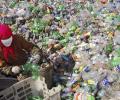
The issue of pollution caused due to the non-degradable material is keeping consumer goods majors - from ITC and Dabur to Nestl and PepsiCo - on their toes.

A team of the Central Pollution Control Board, which visited the fabled Silk Route in 2007, a year after it was reopened for cross border trade between China and India, found that expansion of the trade route was disturbing the ecosystem of the area. "Reopened with an aim to boost trade between China and India, ongoing expansion of one of the world's highest navigable roads is in progress without any precaution of the possible environmental impact," the Board said.

The city's air quality index stood at 385 at 9.05 am, while that of Noida, Gurgaon and Greater Noida was recorded at 406, 363, 296, respectively.

Delhi's air quality plummeted to alarming levels on Tuesday after 24 days, with many areas witnessing a significant spike in pollution despite the strictest measures, including a ban on construction activities and the entry of trucks into the city, coming into force.

The city's Air Quality Index (AQI) stood at 420 at 8 am on Thursday, compared to 426 at 4 pm on Wednesday. The AQI map prepared by the Central Pollution Control Board showed clusters of red dots (indicating hazardous air quality) spread across the Indo-Gangetic plains.

The Uttar Pradesh government, citing a scientist, has asserted that Ganga water at the ongoing Maha Kumbh in Prayagraj is as pure as "alkaline water", debunking concerns raised by the Central Pollution Control Board (CPCB) about water quality. The government claims that a scientist found no bacterial growth or decline in the water's pH level, despite millions of devotees bathing in the river. However, experts caution that the quality of the Ganga water is not static and can vary greatly depending on various factors.

The eight areas that recorded 'severe' air quality Saturday are Anand Vihar, Dwarka Sector 8, Narela, Punjabi Bagh, Bawana, Mundaka, Vivek Vihar and Rohini.

The Centre directed Uttar Pradesh and Bihar on Sunday to prevent dumping of dead bodies in the Ganga and its tributaries, and focus on their safe disposal and a dignified cremation after corpses were seen floating in these rivers following a spurt in the number of coronavirus cases.

The Indian government has stated that the water in the Ganga river at Triveni Sangam in Prayagraj was fit for bathing during the recently concluded Maha Kumbh, citing a new report from the Central Pollution Control Board (CPCB). The report, however, contradicts an earlier CPCB report that found high faecal coliform levels at several locations in Prayagraj during the Maha Kumbh. The government also highlighted measures taken to ensure water quality during the event, including the installation of sewage treatment plants and the use of advanced oxidation techniques to treat wastewater.
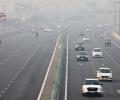
The city's 24-hour Air Quality Index (AQI), recorded at 4 pm daily, stood at 417, making it the worst in the country. On Friday, the AQI level was 396.

With such announcements grabbing the voters' attention, critical issues like pollution, especially the smog that chokes Delhi every winter, remain largely unaddressed. Many residents have raised concerns over the lack of concrete action plans to combat air pollution, which continues to pose a severe health risk to Delhiites.

Over the past three trading sessions, the stock of Cummins India has gained about nine per cent on strong January-March quarter (Q4) results and good near-term prospects. Its Q4 performance was led by a healthy 29 per cent revenue growth over the year ago quarter. This was largely on the back of a 33 per cent jump in domestic revenues while exports witnessed a growth of 17 per cent.

A bench of the NGT, headed by its chairperson Justice Adarsh Kumar Goel, directed that the order will also apply to all cities and towns in the country where the average of ambient air quality during November (as per available data of last year) falls under 'poor' or worse category.

When it closed close down the copper plant at Thoothukudi in 2013. Its orders were held illegal by the NGT on procedural grounds

Violation of the provisions entails a punishment of a jail term of up to five years or with fine up to Rs one crore or with both.

Low temperature -- Delhi recorded a minimum of 13.5 degrees Celsius on Tuesday, the season's lowest so far -- allowed accumulation of pollutants, said Mahesh Palawat, vice president (meteorology and climate change), Skymet Weather.

Report by Greenpeace also presented a grim picture of India's pollution level.

The Sterlite Copper Smelter unit in Tuticorin, which was shut down over two months ago, has resumed operations after the National Green Tribunal's expert panel gave a green signal.

The PMK has now lent its voice to the protests against the mining of atomic minerals in Kanyakumari.
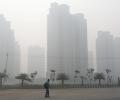
It also asked the governments of Punjab and Haryana to take immediate stringent actions to curb stubble burning and authorities in Delhi-NCR to strictly check biomass burning.

The city's 24-hour Air Quality Index, recorded at 4 pm every day, stood at 418, up from 334 the previous day, and it may trigger stringent restrictions under the third stage of the graded response action plan to mitigate hazardous conditions.

Delhi's overall air quality index (AQI) stood at 463 at 11.30 am, according to the System of Air Quality and Weather Forecasting and Research (SAFAR).

People stood at their places with their phone cameras open but faced trouble capturing aircraft formations due to the layer of fog and smoke cloaking the capital.
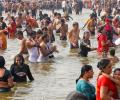
The Ganga water at the Triveni Sangam in Prayagraj, where lakhs of people are taking a holy dip every day during the ongoing Maha Kumbh, is currently unsafe for bathing as it exceeds the prescribed limit for biological oxygen demand (BOD), a key parameter to determine water quality, according to government data.

According to the Graded Response Action Plan (GRAP), the air quality is considered to be in the emergency category if the PM2.5 and PM10 levels continue to be above 300 micrograms per cubic metre and 500 micrograms per cubic metre respectively for 48 hours or more.

Areas in the National Capital Region -- Noida and Gurugram -- recorded an AQI of 529 and 478 respectively both in the highly toxic 'severe'.

The poisonous haze has been causing significant problems for people with existing respiratory issues, according to doctors.

Welcoming the reduction in pollution, environmentalists urged the government to treat it as a "wake-up call" and stop its "obsession" with "development" at the cost of the environment.

The overall Air Quality Index was recorded at 231 on Sunday which falls in 'poor' category.

The pollution board said that the situation will improve further by Sunday if favourable conditions prevail.

The national capital on Friday recorded a 24-hour average air quality index of 239. On Thursday, it was 315, the worst since February 12 when the AQI was 320.

Directions have been issued to about 48 industrial units polluting River Ganga to close down, the Rajya Sabha was informed on Monday.

This time, Delhi saw a sharp improvement in air quality just ahead of Diwali which can be attributed to intermittent rainfall on Friday and wind speed favourable for the dispersion of pollutants.

The spurt in pollutants was caused by a combination of meteorological factors including a drop in temperature, wind speed and mixing height, a layer where air and particulates float, the Central Pollution Control Board said.
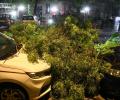
A strong dust storm and gusty winds followed by rain hit Delhi-NCR on Friday evening, causing trees to be uprooted in several parts and leading to traffic congestion. Thunderstorms caused power disruptions in several parts of the city, primarily due to trees and branches falling on electricity cables. The India Meteorological Department (IMD) has issued an orange alert, recommending people stay indoors and avoid unnecessary travel.

The nationwide 'Janta Curfew' followed by the 21-day lockdown to combat the coronavirus outbreak have led to a significant reduction in pollution in the country, with 91 cities recording air quality in the 'good' and 'satisfactory' category on March 29, a Central Pollution Control Board report has stated. Travel restrictions and the closure of industries have helped reduce the pollution level, it said.

Chief Minister Arvind Kejriwal inaugurated the 'country's first smog tower' at Connaught Place in New Delhi on Monday and said it will prove to be a milestone and many such structures can be installed in the city if the pilot project yields results.

The environment ministry is likely to soon issue regulations that will mandate automakers to recycle a specified percentage of steel from old vehicles, starting from the next financial year, according to people familiar with the matter. "We recently held a meeting with members of the Society of Indian Automobile Manufacturers (Siam). "The final regulations are likely to be issued in the next 10 days," a government source informed.
